
Letter from the Chancellor

Glenn Hegar

The Texas A&M University System was built to serve Texas. That has been the mission from the start, and it remains the standard we are measured against.

We see it every day. Students working to build a better future. Researchers focused on problems that matter. Communities that rely on our institutions to be present and engaged. That work is steady, and it matters.

But the pace around us is changing. Technology is moving quickly. Workforce needs are shifting. The competition for talent and innovation is real, and it is not slowing down. We have to be clear-eyed about that.

Meeting this moment will take more than individual success. It will take discipline, alignment, and a willingness to work together across the System.

This plan is about doing just that. The Board of Regents has provided clear leadership throughout this process, setting the priorities that will guide the A&M System’s work in the years ahead.

It builds on the strengths of each university and agency while creating more ways to collaborate. It sets priorities, defines expectations, and removes barriers that limit what we can accomplish together. At the same time, it respects the differences that make each institution effective in its own community.

If we stay focused and execute, the results will follow. Stronger pathways for students. Deeper partnerships across the state. And a System that continues to deliver for Texas in a meaningful way for generations to come.

That is the responsibility we carry, and it is one we take seriously. 

In service,  

Glenn Hegar 
Chancellor 

Letter from the Board of Regents

The Texas A&M University System has always been grounded in a simple idea. We serve Texas. 

That has meant expanding opportunity, advancing research, and supporting communities across this state for generations. It is a responsibility the System has carried forward through growth, change, and new challenges.

This plan builds on that foundation. 

It does not change who we are. It reflects the work already happening across our universities and agencies and brings it into clear focus. For years, our institutions have been moving in this direction. This plan aligns those efforts and strengthens them.

As a Board, we see the System’s strength in two places. First, in the excellence of each institution and agency. Second, in what they can accomplish together.

When we are aligned, the impact is greater. We can respond more effectively to the needs of our students and this state, extend our reach in all 254 counties, and deliver results at a scale few can match.

We have seen that approach take hold under Chancellor Hegar’s leadership. He has emphasized collaboration, accountability, and long-term results, while respecting what makes each institution distinct. That approach has strengthened the System and positioned it well for what is next.
 
Texas is growing and changing. The Texas A&M System must do the same.

This plan provides a clear path forward and reinforces our commitment to work together with purpose and discipline, always grounded in the mission that defines us. 

Signed, 

Robert L. Albritton 
Chairman, The Board of Regents 


Texas A&M System Impact and Role in Texas

Texas is growing at an extraordinary pace, attracting people. investment, and innovation at a scale few regions can match. To carry this momentum into the future, Texas A&M System members will rise to the challenge by developing talent, advancing research, and serving communities is coordinated and responsive ways, particularly as needs evolve and expectations for impact increase.

With its breadth across universities and state agencies and presence in every Texas county, the Texas A&M System is uniquely positioned to meet this moment. Seizing this opportunity requires stronger alignment, collaboration, and coordination. This strategic plan defines how the Texas A&M System will work together to expand opportunity, strengthen communities, and create generational impact across Texas.

  • Second-Largest State in the U.S.
  • $2T+ State Economy, Larger than Most Countries
  • One of the fastest-growing states by population over the past decade
  • 50+ Fortune 500 Headquarters, More than any other state
  • 12 Universities
  • 8 State Agencies
  • 175,000+ Students Enrolled
  • 33,000+ Faculty and Staff
  • $1.57B+ In Annual Research Expenditures
  • Serving in all 254 counties
  • Hundreds of Thousands of Texans Served Each Year

This strategic plan establishes a shared direction for the Texas A&M System. It provides a framework to align priorities, guide decision-making, and improve collaboration. A&M System members will map their strategic and operational plans to this plan, which serves as a North Star for planning and prioritization, by identifying new opportunities, refining existing strategies, and highlighting contributions to broader A&M System goals. 

This plan is not a one-size-fits-all blueprint for every Texas A&M System member. The Texas A&M System is comprised of members with distinct missions, strengths, and geographies. As such, the plan does not prescribe uniform actions, replace existing strategic plans, or constrain differentiation. 


Mission, Vision, and Principles

The mission defines why the Texas A&M System exists, the vision sets its direction, and the guiding principles establish how leaders across the Texas A&M System pursue the mission and vision. Together, these elements provide the foundation to align the Texas A&M System and successfully implement the strategic plan.

THE TEXAS A&M SYSTEM MISSION

Leading Texas, Serving the Nation by building strong leaders of character and creating economic opportunities through world-class education, cutting-edge research, and impactful public service. 

THE TEXAS A&M SYSTEM VISION

The Texas A&M System will rise to today’s challenges with tomorrow’s vision, through education that empowers, research that matters, and service that uplifts and protects 

THE TEXAS A&M SYSTEM GUIDING PRINCIPLES

Unity of purpose sustains the mission and builds trust, intentionality sets direction, excellence defines the standard, responsiveness ensures relevance and agility, and leadership guides, inspires, and empowers members throughout the process. 


Operationalizing the Plan

The Texas A&M System will execute this strategic plan with clear ownership, coordination, and accountability, consistent with its guiding principles and mission. Implementation will focus on achieving measurable outcomes using defined metrics and performance reviews to track progress, inform decisions, align resources, and communicate impact across the Texas A&M System. Success will be evaluated not by activity alone, but by the impact created for Texas and the progress made toward long-term strategic goals.

The plan established a common framework for measuring progress toward shared systemwide priorities while recognizing the distinct missions of Texas A&M System members.

The Texas A&M System will focus on areas where coordinated action delivers greater impact than any single member acting alone.

Implementation will be phased and selective, prioritizing a limited set of high-impact objectives each year rather than advancing all actions simultaneously.

Execution will prioritize quality, effectiveness, and scalability, using system-level frameworks, shared services, and Communities of Practice to elevate best practices and reduce duplication.

Progress and outcomes will be regularly reviewed using agreed-upon metrics to inform decision-making and enable timely adjustments.

Texas A&M System leadership will provide clear direction, alignment, and accountability, enabling collaboration, clarifying roles, and sustaining momentum to translate strategy into measurable outcomes.


From Land Grant Roots to Generational Impact

The Texas A&M System was created to solve problems, expand opportunity, and serve Texas. Established through the Morrill Act, the land-grant model recognized a simple truth: meaningful progress happens when education, research, and service work together to solve real problems. This model links learning to opportunity, discovery to application, and public institutions to the communities they serve.

Today, 150 years later, that responsibility is larger than ever. The challenges and opportunities shaping Texas and the nation cannot be addressed by any single institution acting alone. They require a coordinated system of educational pathways, research enterprise, public-service capabilities, and strategic partnerships that create opportunities for impact at scale.

The Texas A&M System is uniquely positioned to meet this responsibility. This plan advances that mission through four Strategic Drivers of Impact that work together to expand opportunities, strengthen communities, and improve lives for generations to come.

A uniformed cadet receives insignia from a woman and young child during a commissioning ceremony.

Strategic Drivers of Impact

The Texas A&M System creates lasting impact through four interconnected Strategic Drivers of Impact. Each Driver delivers value independently, but their greatest impact is realized when they work together to educate leaders, serve Texas and shape generations.  

Student Success develops talent and leaders.
Research & Innovation advances discovery and solutions.
Community Advancement applies expertise to create impact.
Mission Enablement expands capacity and scale.

Together, they form a force multiplier that creates generational impact.


Driver of Impact 1: Student Success

Vision for the Strategic Driver

Strengthen Texas A&M System support of lifelong students by improving access to and impact of education to achieve personal goals and develop strong leaders of character. 

Student success is the most direct expression of Texas A&M System’s responsibility to Texans. Through its universities, agencies, and statewide capabilities, the A&M System expands educational opportunity, supports student achievement, and prepares learners for meaningful careers, leadership, and lifelong success. As student needs and workforce demands continue to evolve, the Texas A&M System will strengthen pathways, modernize learning experiences, and invest in the people, tools, and support systems that help students achieve their goals and reach their full potential. 

A graduate in a cap and gown embraces a person in academic regalia, smiling joyfully while holding a diploma.

Student Success Objectives

  • 1.1 Create clearer pathways for student success
  • 1.2 Prepare student for careers, leadership, and service
  • 1.3 Modernize educational experience to support student goals
  • 1.4 Invest in the faculty and tools necessary to support students
  • 1.5 Empower students to flourish in Texas and their communities

Defining Student Success

In this plan, student success means broadening access to higher education, supporting students to stay on track, and helping learners achieve their educational goals. It includes preparation for meaningful careers and leadership roles and the development of knowledge, skills, and adaptability needed to thrive in a changing world. Through curricular, co-curricular, and student support experiences, the Texas A&M System strives to help students build skills and confidence, so graduates leave as resilient, adaptable leaders and achieve their goals with strong career and economic mobility outcomes.

Identify key academic, financial, and well-being barriers to entering and progressing through a Texas A&M System education and strengthen infrastructure to create clear, affordable pathways to a student’s intended degree or credential.

Actions

1.11 Identify key entry, completion, and student support barriers, and access gaps and issue targeted guidance to remove identified challenges.

1.12 Establish shared pathway or program maps and provide systemwide standards for transfer, dual-credit, credit for prior learning and alignment of academic pathways with workforce needs.

1.13 Leverage Texas A&M System’s resources to develop college-readiness and support a strong college-going pipeline.

1.14 Provide shared academic planning and advising technology, best practices playbook, and training materials for implementation to all members.

1.15 Align affordability initiatives through a collaborative community of practice. 
 

Enable strong career and post-graduation outcomes and economic mobility by aligning academic pathways with evolving community industry needs to prepare students for high-demand, careers, leadership roles, civic engagement, and meaningful contributions to their communities and professions.

Actions

1.21 Aggregate and analyze workforce, community, and public-service demand signals from employers, industry partners, government agencies, and regional stakeholders to identify emerging talent needs and in-demand skills.

1.22 Leverage systemwide Communities of Practice to identify, evaluate, and standardize high quality models for workforce-aligned academic pathways, leadership development, and experiential learning.

1.23 Publish and maintain adaptable frameworks, guidance, and models for embedding work-integrated learning, experiential learning, workforce upskilling, and leadership development into credential pathways.

1.24 Strengthen career readiness, workforce participation, and economic mobility through coordinated career services, employer engagement, workforce transition support, and access to career-connected learning opportunities.

1.25 Provide resources for faculty to engage with industry in support of curriculum alignment, experiential learning, and student career placements. 

Modernize the Texas A&M System educational experience to support lifelong learning, student well-being, re-engagement, and evolving student goals through innovative educational offerings and delivery models.

Actions

1.31 Develop guidance, playbooks, or implementation guides for Texas A&M System members to explore innovative educational pathways that support students, such as accelerated degrees, stackable credentials, or 4+1 or 3+2 programs.

1.32 Develop a systemwide strategy for lifelong learning and re-engagement to support non-traditional learners.

1.33 Develop a systemwide definition for student success and student well-being and establish a common set of metrics that can be collected and shared widely to integrate reporting and provide data-driven advising to members.

1.34 Provide systemwide guidance and support for the use of technology to expand educational delivery models, including AI-supported instruction, hybrid and online learning, and cross-institution course access.

Invest in faculty, staff, and educational supports to continuously improve teaching, advising, student well-being, and the overall student experience.

Actions

1.41 Identify, evaluate, and scale effective teaching, advising, and student-support practices that improve student success, well-being, and post-graduation outcomes.

1.42 Create systemwide guidance and professional development opportunities that strengthen teaching, advising, student success, and student well-being.

1.43 Coordinate instructional technology, digital learning infrastructure, and faculty development to improve teaching, student support, and responsible innovation.

1.44 Provide resources, partnerships, and professional development opportunities that enable faculty to engage with industry, align curriculum with evolving workforce needs, expand experiential learning opportunities, and support student career success.

Enable students to reach their full potential by fostering well-being, connection, resilience, leadership, and meaningful engagement through student-centered support.

Actions

1.51 Create a student engagement and support community of practice with key stakeholders across the Texas A&M System to identify and share best practices, successes, and lessons learned.

1.52 Develop a student-centered communications strategy to improve the timing, clarity, and relevance of information about student support services and wellbeing (e.g., mental health, basic needs, housing, emergency expenditures, etc.) and engagement opportunities.

1.53 Engage the Chancellor’s Student Advisory Council to validate, prioritize, and elevate strategies to increase co-curricular experiences, student leadership, mental health awareness, civic engagement, service, and community connection (clubs, student government, community service, athletics, etc.).

1.54 Assess student experience outcomes and inform continuous refinement of engagement and support strategies. 

These KPIs represent Texas A&M System’s commitment to track the ability for students to access higher education, to accomplish the student’s goal, and graduate with their intended degree or credential. 

Access, Progression & Completion

1 Admission to enrollment yield rate 
2 Student persistence and retention rates 
3 Re-enrollment after stop-out rates 
4 Average time to student’s intended degree or credential and percent of students that achieve educational goal within target timeframe 

Student Experience, Well-being, & Support

5 Percent of students who report a sense of connection, well-being, or confidence 
6 Percent of students utilizing or reached by advising, career, and student services 

Career & Economic Outcomes

7 Number and percentage of programs with experiential learning component(s) and student participation rates 
8 Percent employed or enrolled in further education within 12 months of graduation 
9 Average wage post-graduation 


Driver of Impact 2: Research & Innovation

Vision for the Strategic Driver

Advance cutting-edge research and accelerate innovation by mobilizing Texas A&M System’s distinctive systemwide capabilities to compete nationally, collaborate at scale, and deliver measurable real-world impact. 

Research and innovation are central to this strategic plan because they are the primary ways in which the Texas A&M System delivers large scale impact for Texas. Grounded in excellence and a shared sense of purpose, this strategic driver aligns discovery to the state’s most pressing needs and strengthens collaboration across the A&M System. In doing so, Texas A&M System can accelerate solutions that drive economic growth, support communities, and maintain its role as a leading engine of progress and innovation. 
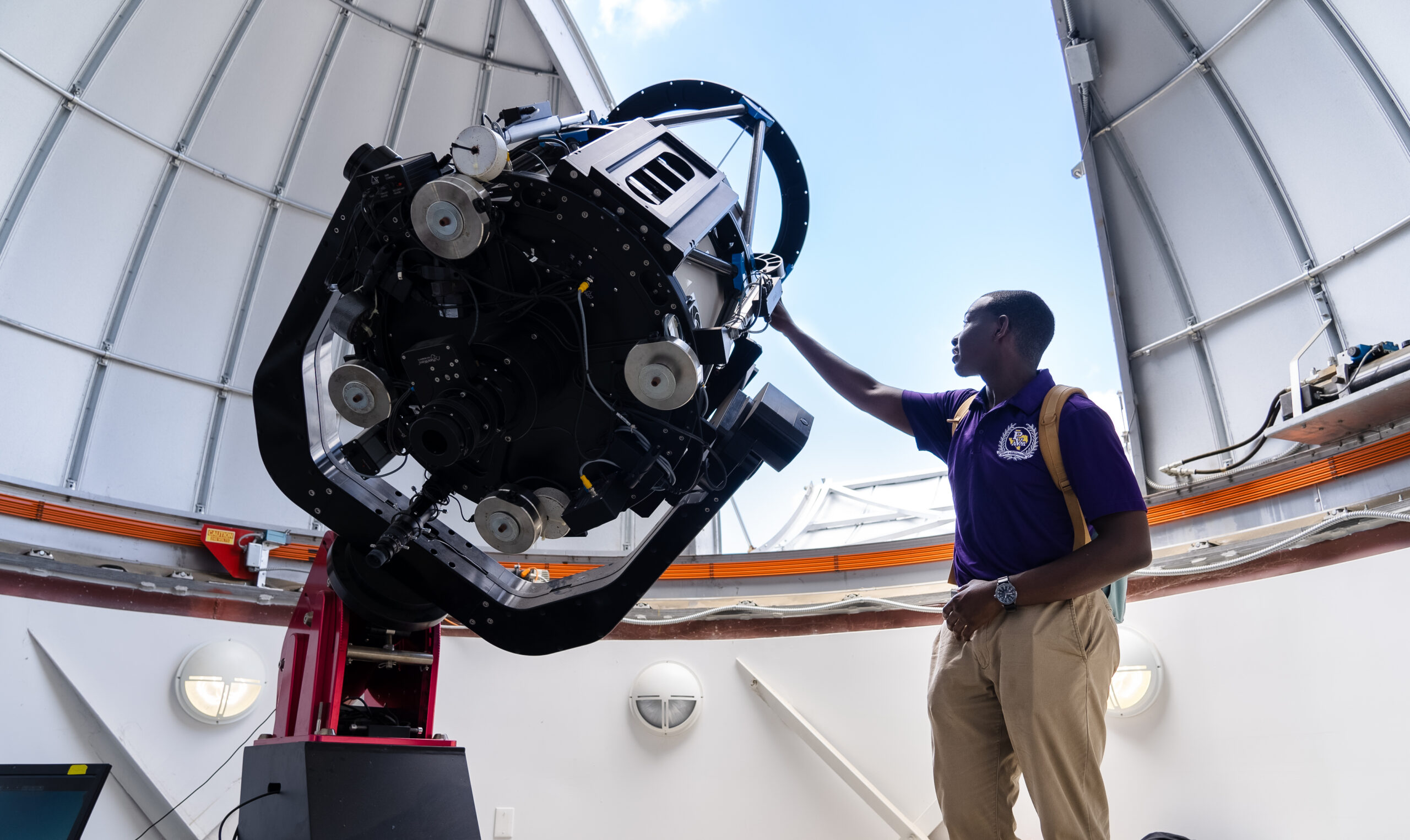
A man adjusting a large telescope inside an observatory dome with the roof open to the sky.

Research & innovation Objectives

  • 2.1 Boldly chart a path forward that identifies and solved grand challenges
  • 2.2 Work collaboratively to maximize impact across Texas A&M System
  • 2.3 Strengthen research, talent, and commercialization readiness
  • 2.4 Elevate the Texas A&M System story and increase impact awareness

Defining Research & Innovation

In this plan, research and innovation mean advancing discovery, developing practical solutions, and turning knowledge into measurable impact for Texas and beyond. It includes supporting foundational and applied research, fostering collaboration across members and disciplines, and building stronger pathways to move ideas into use through commercialization, partnerships, policy, and public service. It also means creating the conditions for researchers, students, and partners to contribute to breakthroughs that strengthen communities, industries, and the state’s future. 

The Texas A&M System will identify, define, and solve grand challenges through coordinated research efforts aligned to pressing Texas, national, and global priorities.

Actions

2.11 Establish a Texas A&M System Advisory Council to define grand challenge domains, appoint accountable executive leads for each, and oversee performance and strategic alignment.

2.12 Continue to support the Research Excellence Fund or its successor to fund the top cross-institution proposals within designated focus areas.

2.13 Build upon the annual Texas A&M System Research Excellence Meeting to convene industry, federal agencies, and philanthropy in a coordinated effort to discuss, and to align around solving grand challenges with researchand innovation.

2.14 Formalize a system-level framework to guide the selection, evolution, and annual refresh of grand challenges.  
 

Align and mobilize the distinct strengths of Texas A&M System members through cross-member and external collaboration to compete more effectively and scale impact.

Actions

2.21 Leverage and scale the Research Excellence Fund to formalize cross-member collaboration through designated leads and Communities of Practice.

2.22 Determine and maintain visibility into systemwide strengths, supported by a centralized repository and dashboard, to highlight talent, expertise, infrastructure, activity, and key assets across the Texas A&M System.

2.23 Align targeted investment, shared services, and commercialization resources, investor engagement, and strategic partnerships around identifies strengths and gaps to grow the innovation ecosystem.

2.24 Tie funding eligibility, scoring, and recognition to cross-member collaboration. 

Strengthen research translation, commercialization, entrepreneurship, and innovation deployment capabilities to move more discoveries through an innovation ecosystem.

Actions

2.31 Establish a Texas A&M System Research Talent Mobility Program with shared candidate pools and cross-member placement pathways, mentorship opportunities, and leadership development experiences.

2.32 Capture member feedback to assess research and innovation progress, identify barriers, and inform continuous improvement.

2.33 Coordinate policies, proof-of-concept resources, mentorship, entrepreneurship support, technical assistance, and innovation services to reduce barriers and create consistent pathways from discovery to deployment.

2.34 Launch a Texas A&M System Research Playbook to streamline policy, compliance, and approval workflows. 

Advance a coordinated effort to elevate and amplify the impact of Texas A&M System research and innovation at the local, regional, and global levels to cultivate brand identity and strengthen national and global standing. 

Actions

2.41 Capture, validate, and amplify major research achievements across media, rankings, and external channels.

2.42 Develop media campaigns around Grand Challenge solutions to continuously showcase progress and impact, shaping external perception and driving sustained stakeholder engagement.

2.43 Establish a system-level research impact recognition program to recognize high-impact contributions, strengthen strategic storytelling and external positioning, and incentivize a culture of recognition and innovation across the Texas A&M System.

2.44 Establish a centralized internal research marketing and communications function to support cohesive branding and systemwide amplification.

These KPIs track how the Texas A&M System is expanding research, solving grand challenges, and turning that into measurable impact.

Research Scale & Momentum

1 Annual research expenditures and growth rate 
2 Research funding and number of publications annually 
3 Number of doctoral graduates annually  

Focus & Strategic Alignment

4 Research funding and number of publications within each grand challenge area 
5 Percent of research funding and publications within each grand challenge area 
6 Percent of research expenditures within each grand challenge area 

Collaboration & System Advantage

7 Percent of research funding and number of publications with multi-member investigators 
8 Percent of research expenditures from multi-member awards 

Talent & Participation

9 Number of strategic hires aligned to grand challenge areas 
10 Percent of researchers aligned to grand challenge areas 

Impact, Commercialization, & Recognition

11 Number of invention disclosures, patents, licenses/options, revenue on royalty, and new ventures 
12 Number of nationally recognized distinctions 


Driver of Impact 3: Community Advancement

Vision for the Strategic Driver

Apply the collective expertise, resources, relationships, and capabilities of the Texas A&M System to create generational impact by strengthening communities, expanding opportunity, and improving lives across Texas.  

As the state’s land-grant system, the Texas A&M System serves Texans not only by developing future leaders and advancing discovery, but also by putting those strengths to work in communities. Community advancement represents the point where education, research, public service, and trusted partnerships come together to strengthen communities, expand opportunity, and improve lives. It is how the Texas A&M System translates expertise into real-world impact for Texans. 

School mascot reads a book to children during a storytime event as two adults assist.

Community Advancement IMpact Objectives

  • 3.1 Align opportunities and measure impact
  • 3.2 Mobilize expertise and build community capacity
  • 3.3 Amplify impact through strategic storytelling
  • 3.4 Strengthen conditions for long-term prosperity

Defining Community Advancement

In this plan, community advancement is the outcome of applying the Texas A&M System’s integrated strengths in education, research, service, and statewide reach to address community needs, create opportunity, and improve quality of life across Texas. 

It is achieved by mobilizing the Texas A&M System’s expertise, public-service capabilities, and partnerships to strengthen local leadership, improve health outcomes, support workforce and economic development, and address emerging challenges. 

Community advancement means leveraging coordinated action across the Texas A&M System to align expertise, mobilize resources, and create greater impact than any member could achieve alone.

Align priorities, identify new opportunities, and measure outcomes to maximize community and economic impact across Texas. 

Actions

3.11 Conduct and maintain a systemwide inventory of community engagement, public service, workforce, economic development, and regional impact activities and capabilities.

3.12 Identify geographic, population, workforce, industry, and resilience opportunities where coordinated A&M System action creates the greatest community and economic impact.

3.13 Engage community leaders, employers, elected officials, faculty, staff, students, and partners to validate community and economic priorities and emerging needs.

3.14 Establish shared community impact reporting that demonstrates progress, elevates promising practices, and strengthens community advancement efforts. 
 

Mobilize A&M System expertise, resources, and partnerships around shared priorities that strengthen community capacity, civic leadership, and long-term impact.

Actions

3.21 Establish and leverage Communities of Practice to share expertise, strengthen civic engagement, and align members on community advancement priorities.

3.22 Identify, document, and scale effective community engagement, workforce, economic development, and partnership models, including developing playbooks and governance structures.

3.23 Establish regional councils, coordination structures, and designated leads to increase visibility of A&M System capabilities, align local priorities, improve coordination and mobilize A&M System resources.

3.24 Partner with local organizations and state leadership to launch targeted, region- and industry-specific growth initiatives across Texas.

Create a unified Texas A&M System community impact narrative through shared measures, reporting, communication, and stakeholder understanding.  

Actions

3.31 Establish common metrics and performance measures for community, workforce, economic, resilience, and public-service outcomes.

3.32 Develop and support shared dashboards and reporting tools that improve visibility into community advancement outcomes and impact.

3.33 Develop shared communications resources, messaging guidance, and storytelling tools that help members promote systemwide successes and member-specific wins, including public health and rural service outcomes.

3.34 Identify, validate, and amplify high-impact examples demonstrating how coordinated A&M System activities strengthen communities, advance civic leadership, and expand opportunity across Texas.

Strengthen the conditions that enable thriving communities, resilient regional economies, and generational prosperity across Texas. 

Actions

3.41 Coordinate statewide preparedness, training, response, and recovery capabilities to strengthen community readiness and continuity.

3.42 Expand and align statewide public health capabilities to improve access, reduce health disparities, and strengthen outcomes, particularly in rural and underserved communities.
 
3.43 Advance sustainable land, water, transportation, and infrastructure strategies that strengthen community resilience, resource stewardship and support longterm prosperity.

3.44 Strengthen regional capacity to address emerging community and economic challenges through coordinated planning, applied expertise, and shared solutions. 

These KPIs show how Texas A&M System deploys expertise, develops partnerships, and creates opportunities in communities across Texas. 

Community Reach & Deployment

1 Number of identified and prioritized community advancement opportunities aligned to shared priorities. 
2 Number of Texans reached through Texas A&M System community advancement initiatives. 
3 Number of counties, regions, or communities served through Texas A&M System community advancement initiatives.  

Community Capacity & Civic Leadership

4 Number of participants in leadership development, civic leadership, governance, extension, or community-capacity building programs. 
5 Number of active community advancement initiatives involving multiple A&M System members or external partners.  

Impact & Outcomes

6 Percent of community advancement initiatives with defined outcomes and evidence of progress 
7 Percent of community partners reporting that Texas A&M System engagement addressed identified needs or added measurable value. 
8 Estimated economic impact of community resilience programs  


Driver of Impact 4: Mission Enablement

Vision for the Strategic Driver

Build the capacity required to serve Texas at scale through aligned priorities, responsible stewardship, and strategic investment in people, technology, and infrastructure.

The Texas A&M System’s ability to serve Texas depends not only on the success of its students, research, and public-service efforts, but also on the strength of the people, systems, technology, infrastructure, and resources that make those outcomes possible.

As the A&M System grows and the needs of Texas become increasingly complex, Mission Enablement ensures the Texas A&M System remains aligned, accountable, and positioned for long-term success. Through strategic investment, responsible stewardship, and continuous improvement, the A&M System can maximize impact, strengthen long-term sustainability, and expand its capacity to serve Texas. 
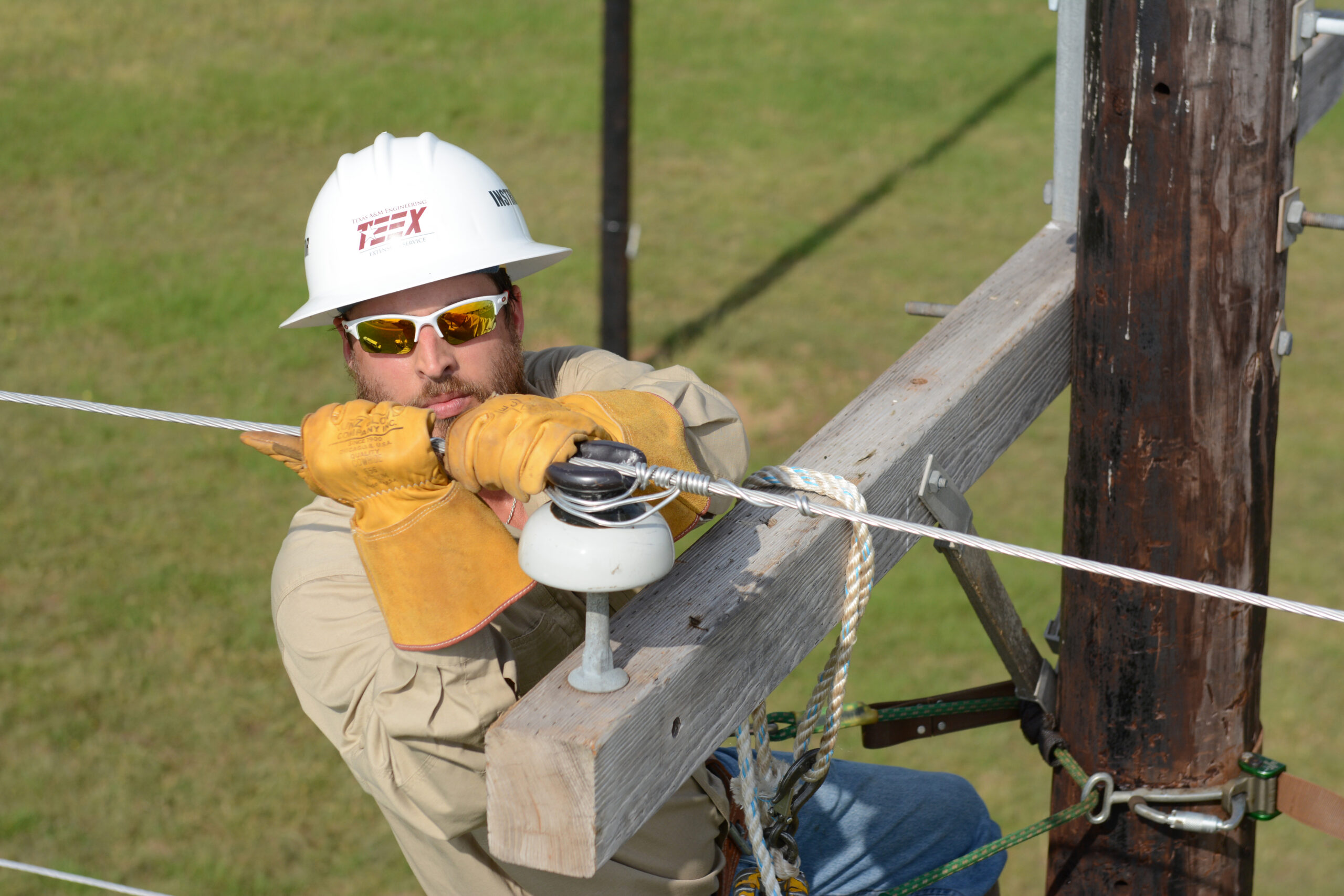
A utility worker wearing a hard hat and gloves is working on a wooden utility pole with wires and equipment.

Mission Enablement Objectives

  • 4.1 Align decisions and investments with priorities
  • 4.2 Strengthen workforce and leadership capacity
  • 4.3 Leverage technology to improve performance
  • 4.4 Optimize stewardship of resources

Defining Mission Enablement

Mission Enablement is the process of building and sustaining the capacity required to achieve the Texas A&M System’s mission. It includes aligning strategy and resources, developing talent and leadership, modernizing technology and data capabilities, and stewarding financial and physical assets in ways that maximize long-term impact. Mission Enablement also promotes accountability by aligning decisions, investment, and performance measures with A&M System priorities and mission outcomes. 

Mission Enablement focuses on how the Texas A&M System strengthens its ability to support its members, deliver results, and create lasting value for Texas. 

Align decisions, investments, performance measures and risk management practices with systemwide priorities to maximize impact and safeguard A&M System integrity. 

Actions

4.11 Develop and maintain enterprise planning, governance, and decision-making frameworks that align priorities, accountability, and execution across the Texas A&M System.

4.12 Integrate strategic planning, enterprise risk management, compliance, internal control frameworks, and performance management processes to strengthen organizational alignment, execution, and accountability.

4.13 Establish shared performance measures and reporting processes that improve transparency, support strategic decision-making, and monitor progress toward A&M System priorities.

4.14 Evaluate and strengthen shared services, resource allocation and investment frameworks to maximize impact and support long-term A&M System priorities.  

Strengthen the workforce, leadership pipeline, organizational culture, and capabilities needed to sustain long-term mission success.  

Actions

4.21 Evaluate, strengthen, and scale leadership development opportunities to build organizational capacity across the Texas A&M System.

4.22 Develop systemwide talent development, succession planning, and workforce capability strategies that support long-term organizational effectiveness.

4.23 Foster a system culture of engagement, recognition, and belonging that attracts, develops, retains, and sustains a high-performing workforce.

4.24 Expand Communities of Practice, knowledge-sharing networks, and collaborative learning opportunities that strengthen institutional capability.

4.25 Strengthen internal communication, transparency, and change management capabilities to build trust, share understanding, and increase alignment across A&M System members. 

Leverage technology, data, analytics, AI, and digital capabilities to improve performance, decision-making, and service delivery.  

Actions

4.31 Establish systemwide technology and data strategy, governance frameworks, strategies, and policies that align priorities, define guardrails, protect information, and improve coordination across enterprise platforms and emerging technologies.

4.32 Expand shared analytics, reporting, and decision-support capabilities backed by data governance and data quality that improve organizational performance and strategic decision-making.

4.33 Advance and modernize enterprise technology platforms, interoperability, and cybersecurity capabilities to support operational effectiveness and service delivery.

4.34 Identify, evaluate, and scale emerging technologies that improve organizational effectiveness, productivity, and service delivery.

Optimize stewardship of financial, physical, and operational resources to maximize institutional capacity and long-term mission impact.  

Actions

4.41 Identify and advance opportunities to improve utilization of facilities, infrastructure, technology, and administrative resources across the Texas A&M System.

4.42 Prioritize strategic investments in facilities, deferred maintenance, and capital projects that support long-term mission needs.

4.43 Identify and scale opportunities to strengthen financial sustainability, diversify revenue sources, and maximize return on A&M System investments.

4.44 Improve service delivery and organizational effectiveness through shared services, process simplification, automation, and continuous improvement.  

These KPIs show how Texas A&M System is building capacity and improving operations to support the mission for years to come.  

Strategic Alignment & Leadership

1 Percentage of major A&M System investments and initiatives aligned to strategic plan objectives and priorities. 
2 Percentage of key leadership and mission-critical positions with identified successors and development plans. 

Technology

3 Percentage of members using shared enterprise platforms, analytics capabilities, or common reporting frameworks. 
4 Average reduction in time or costs for administrative processes attributable to technology and process improvement.  

Stewardship of Resources

5 Percent reduction in deferred maintenance backlog and improvement in facility condition metrics  
6 Annual cost savings or cost avoidance generated through shared services, process improvements, and strategic investments  
7 Number and amount of new revenue sources   


Texas A&M System Campuses

Texas A&M – Fort Worth
Texas A&M – Rellis

Purpose and Role Within System Strategy

Texas A&M-Fort Worth and Texas A&M-RELLIS are strategic assets of the Texas A&M System that advance systemwide priorities through collaboration, shared resources and aligned efforts that amplify the impact of individual members. By bringing together member institutions, state agencies, industry partners, and communities, these campuses expand the A&M System’s capacity to address regional and statewide opportunities in education, research, workforce development, and economic growth.  
 
While each campus operates under its own executive leadership and administration, its plans, programs, partnerships, and investments are developed to align with and advance the priorities of the Texas A&M System Strategic Plan.

Governance and Alignment

Within this framework, Texas A&M-Fort Worth and Texas A&M-RELLIS retain responsibility for campus-level planning, operations, development, and execution. This approach allows each campus to respond to regional needs while remaining aligned with systemwide priorities and objectives. 

As system campuses, Fort Worth and RELLIS demonstrate how coordinated member expertise, investments and partnership expand opportunity, accelerate innovation, and advance outcomes that benefit the A&M System and state of Texas.